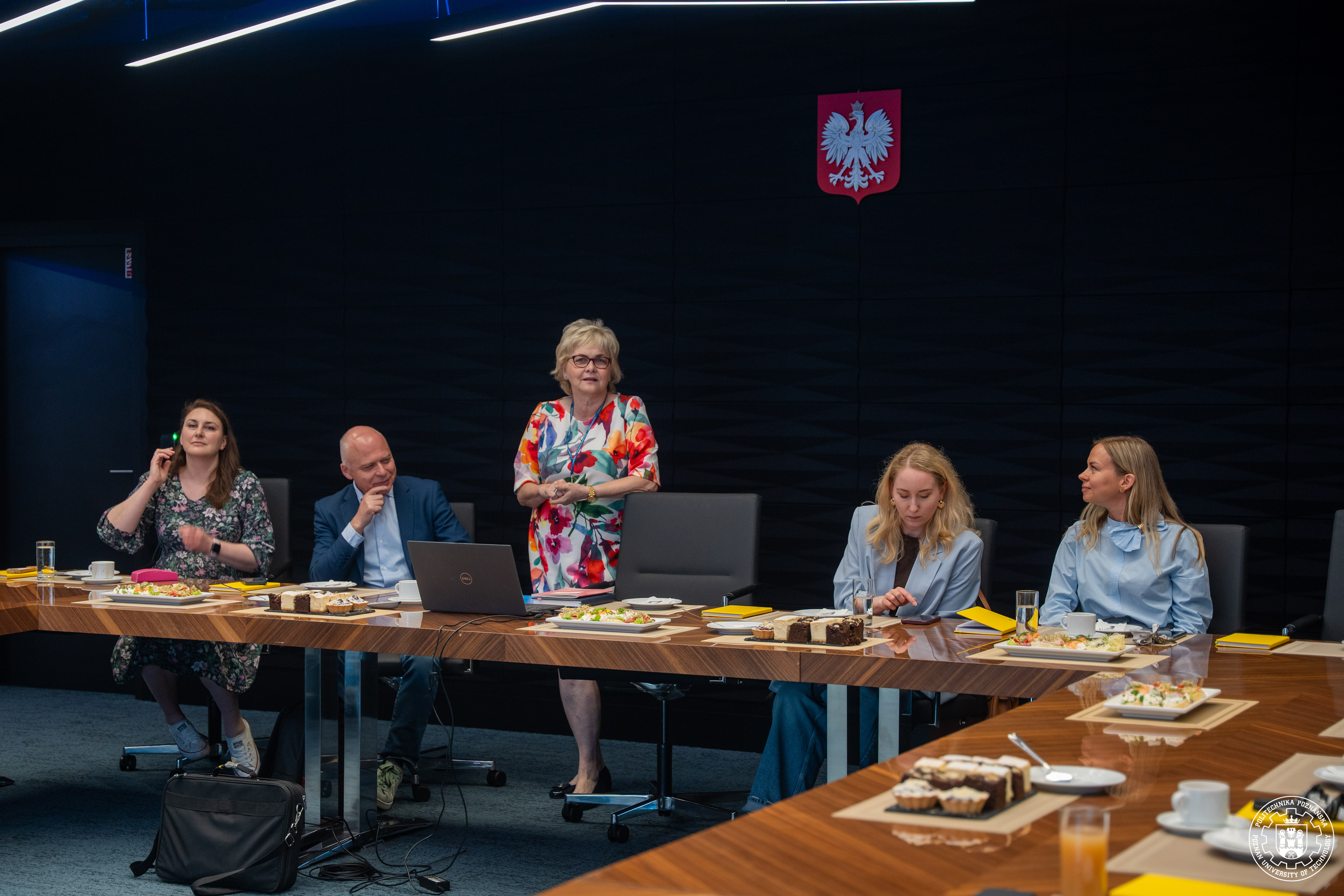
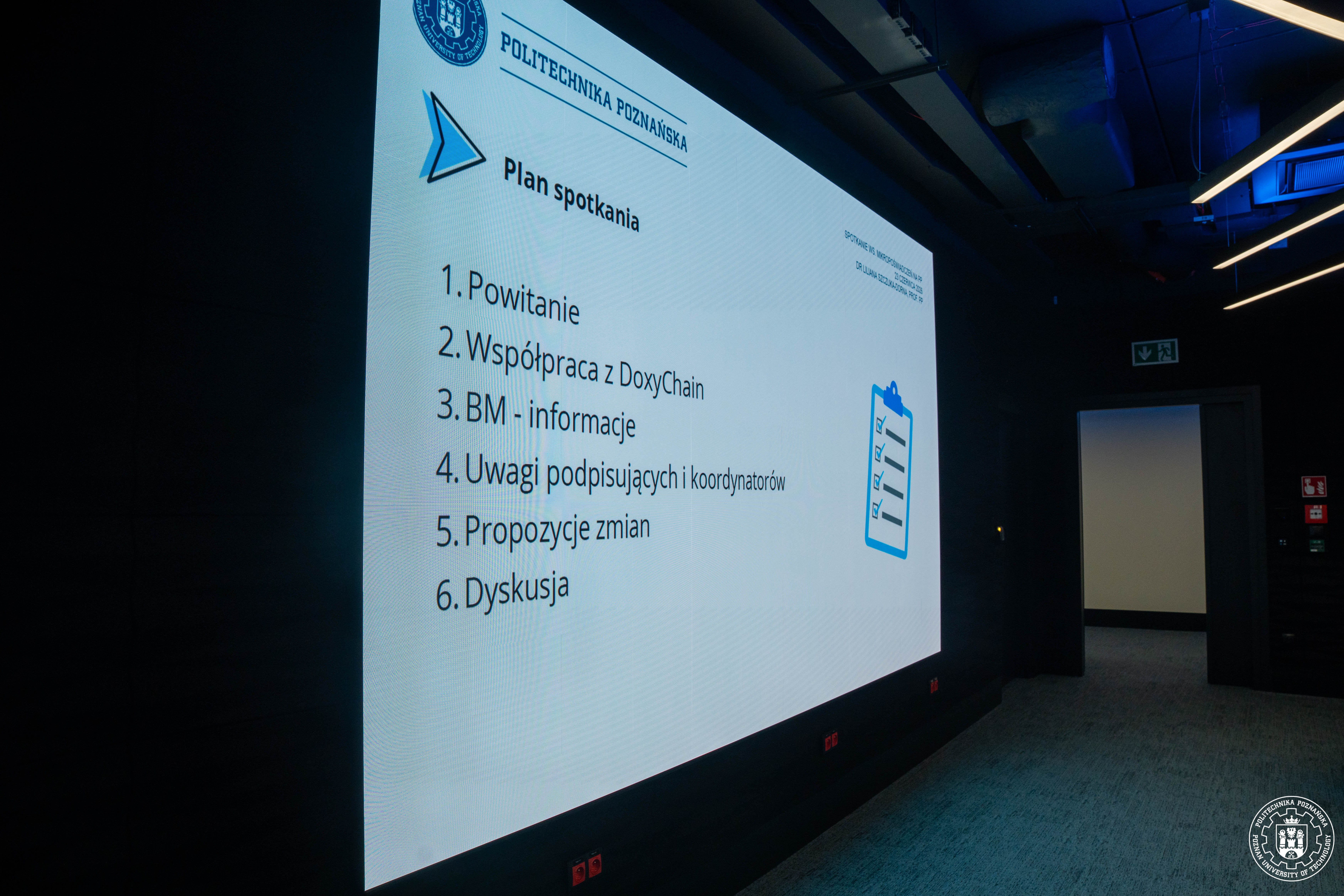
The past year has marked an important stage for Poznan University of Technology in the development of its micro-credentials system. It was a time of intensive implementation work, building procedures, testing new solutions, and gaining the first practical experience related to issuing digital certificates confirming acquired competences.
From the first organisational activities to launching the process of issuing micro-credentials, the work required the involvement of many people and university units. A particularly important role was played by the Micro-credentials Office, which coordinated activities, supported those involved in the process, and continuously contributed to developing solutions tailored to the needs of Poznan University of Technology.
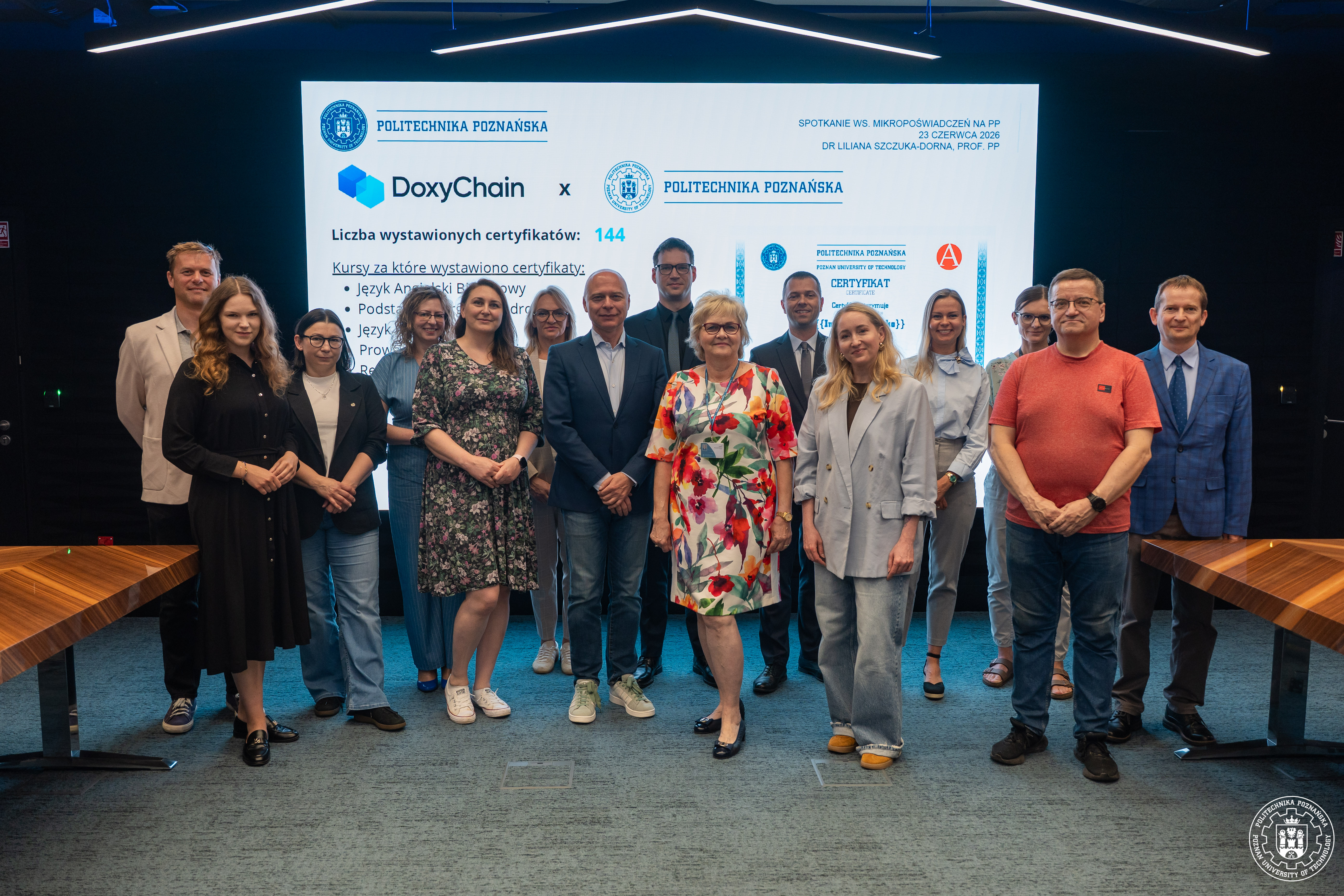
As a result of the activities carried out so far, 144 certificates have already been issued. Micro-credentials have been prepared for courses delivered at Poznan University of Technology, including those implemented as part of educational projects aimed at expanding the university’s offer. This is an important step towards a modern and flexible way of confirming learning outcomes and competences acquired by participants in various forms of education.
An important moment summarising the experience gained so far was also the participation in the 1st Forum of Practitioners of European Universities, organised at Poznan University of Technology. As part of the “Education” track, micro-credentials were discussed as a solution already being implemented in practice - from process design, organisation and administration, to issues of recognition and further development. Dr Liliana Szczuka-Dorna, PUT Professor, Rector’s Representative for Micro-credentials, moderated the panel dedicated to the effective implementation of micro-credentials at universities. This perspective was complemented by presentations delivered by Maciej Stopierzyński, President of DoxyChain, and Dr Daniel Wilusz from Poznań University of Economics and Business, who presented micro-credentials from different perspectives - technological, organisational and educational. The Forum thus became an opportunity not only to present the experience of Poznan University of Technology, but also to hold a broader discussion on the role of micro-credentials in modern higher education.
The first year of work on micro-credentials was also a valuable learning process. Implementing a new solution made it possible to better identify the organisational, technical and formal needs related to issuing digital certificates. The experience gathered now provides a basis for further improving procedures and developing the system so that it becomes even more transparent, intuitive and user-friendly.
An important element of this stage was cooperation with the DoxyChain platform, used for issuing and managing micro-credentials. This solution enabled, among other things, the centralisation of information on certificates, more efficient process management, and easier handling of documents. At the same time, the practical use of the platform made it possible to formulate the first conclusions and recommendations regarding the further development of the process.
Activities related to micro-credentials are now entering the next stage. After the phase of first implementations and testing solutions, the time has come for improvements, automation of selected elements of the process, and further adjustment of procedures to the needs of the university. Planned activities will include improving the application process, developing documentation, and preparing the organisation for growing interest in micro-credentials in the coming academic years.
The experience gathered during the first year shows that micro-credentials have great potential as a tool supporting modern education, competence development and the idea of lifelong learning. Thanks to the commitment of the team, the Micro-credentials Office, coordinators, signing authorities and technology partners, Poznan University of Technology has created solid foundations for the further development of this area.
The first results are already visible, and the next activities will focus on making the micro-credentials system at Poznan University of Technology increasingly effective, accessible and responsive to the needs of the academic community and the socio-economic environment.
In parallel with the work carried out at Poznan University of Technology, the process of implementing micro-credentials within the EUNICE European University was also being developed. This was an additional and demanding task, carried out simultaneously with university-level activities and requiring the reconciliation of different perspectives, procedures and needs of international partners. The past year has brought very significant progress in this area - the process of implementing micro-credentials within EUNICE has been almost fully completed, creating solid foundations for the further use of this tool in the Alliance’s educational offer. This shows that the work carried out at PUT contributes not only to the development of the university, but also to a broader European direction of change in education.